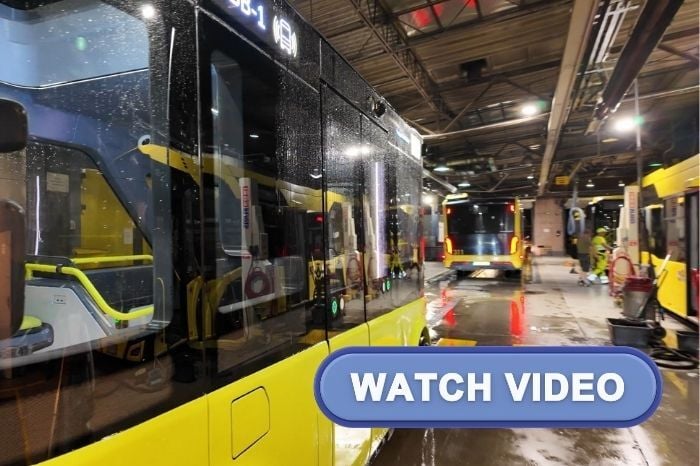
Giving time back to drivers
Protect reliability by giving time back to drivers — starting with low-speed depot moves that consume capacity every day. Watch the video to see smartbus – the driver’s friend in the depot.
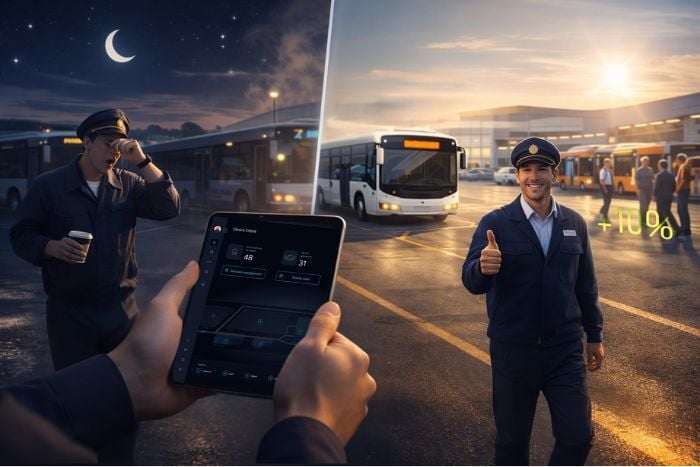
The ROI of smartbuses
How depot autonomy shows up in the numbers?
If you’re responsible for service reliability, staffing, or operating cost, the ROI question around autonomy is usually practical:
Can autonomy remove measurable friction from daily operations – and does that translate into capacity or cost you can bank?
Revolution Evolution in bus autonomy
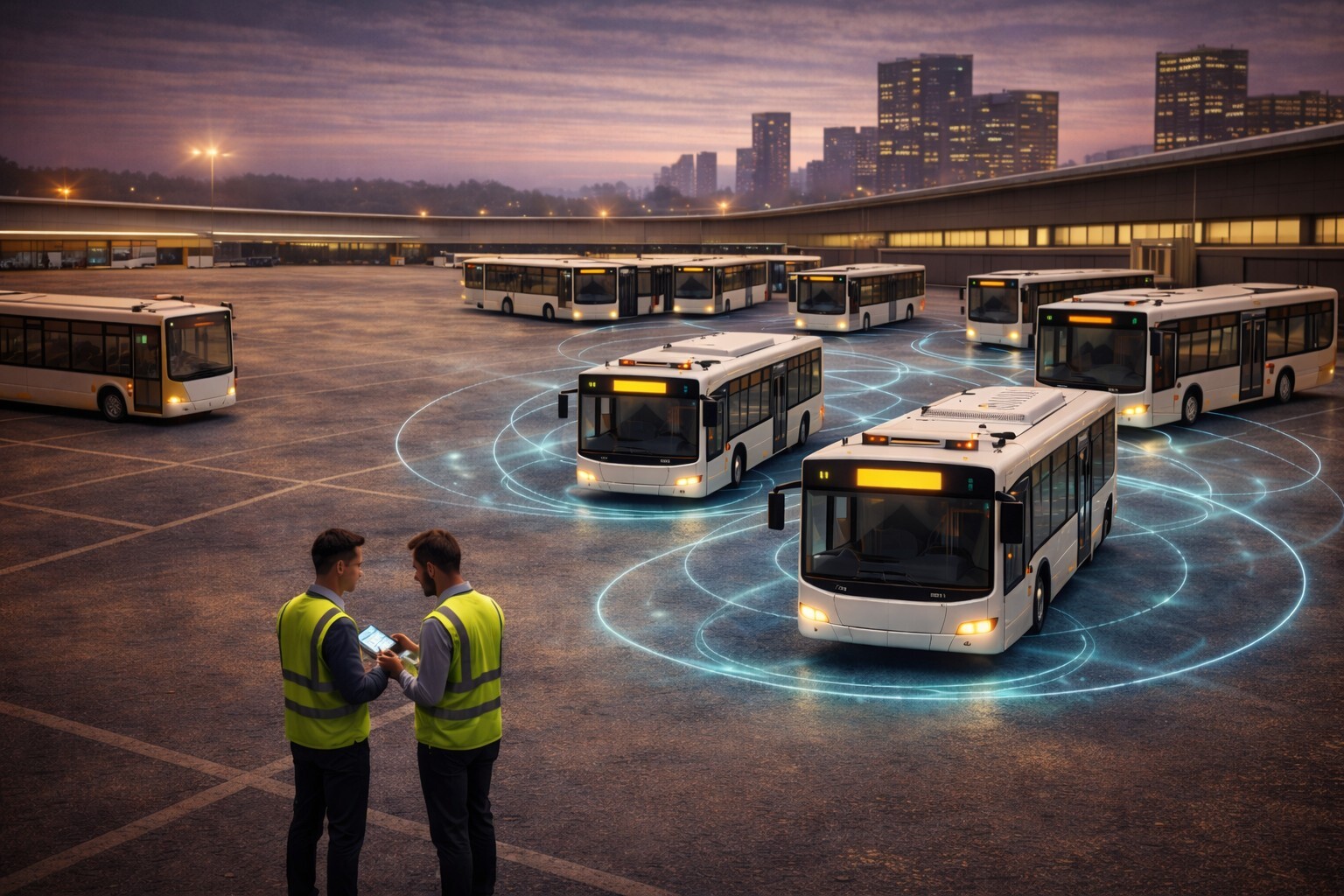
It’s tempting to frame autonomous driving as a single leap. In public transport, adoption tends to be incremental – because the system is built for reliability, and new capabilities have to fit into daily operations without disrupting service. That is why a practical strategy is evolution, not revolution: introduce autonomy in a defined domain, learn safely in real operations, and expand capability step-by-step.
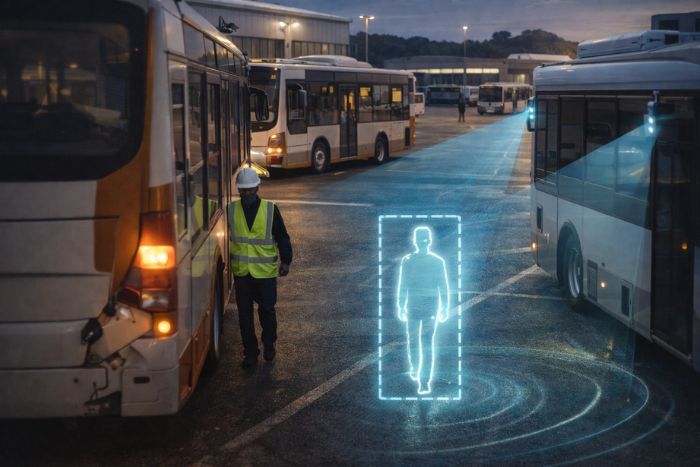
How safe are smartbuses?
A useful starting point is to separate two things:
The operating environment: depots are active workplaces, with people present for cleaning, daily checks, servicing, charging, and ad-hoc tasks. In practice, you rarely get a guarantee that an autonomous bus will always have a perfectly “cleared” zone.
The safety architecture: where the system’s “eyes and judgement” live, and what dependencies exist outside the vehicle.
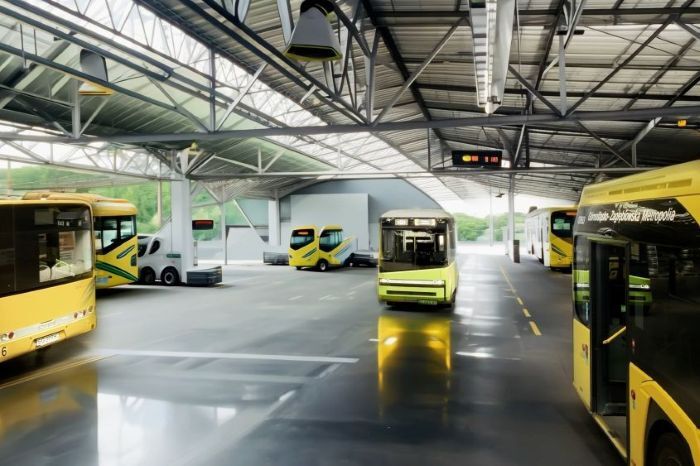
Autonomy starts in the depot
The dream vs. the reality of autonomous buses
For years, the vision of autonomous buses has focused on driverless vehicles navigating busy city streets. But large-scale road pilots remain slow, costly, and tied up in regulation. Cities and operators cannot afford to spend millions on demonstrations that don’t scale.
If autonomy is to deliver real impact, it needs to start where it can create value immediately — not on the road, but in the depot.
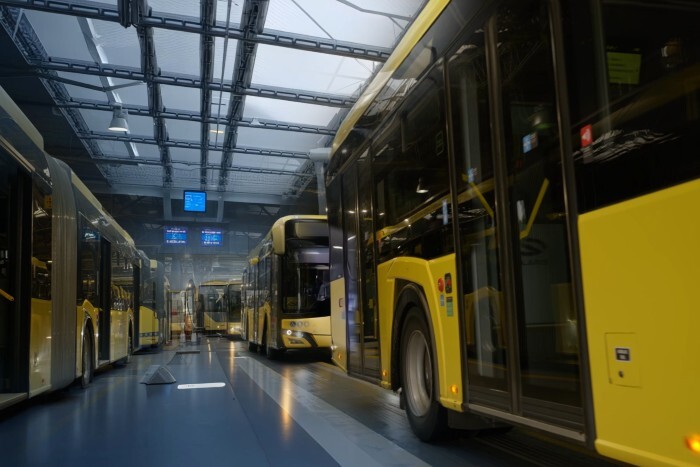
Redutowa Depot
The First Depot in Europe Designed for Smartbuses
Redutowa is MZA Warsaw’s new smartbus depot concept, built as Europe’s first facility designed from scratch for autonomous operations inside the depot. It uses a compact two-level layout for 140 vehicles, removes staff from the garage for greater safety, automates manoeuvres and fire evacuation, and manages all movements from a central smartbus control centre with a dedicated Smartbus Coordinator role. The concept delivers up to 35 minutes saved per bus per day, fewer minor collisions, and over EUR 88,000 in labor savings per vehicle across 12 years.
Depot-first autonomy is the fastest path to real-world bus automation. In our Knowledge hub you’ll find practical guides and evidence on smart depots and smartbuses — how autonomous depot driving streamlines washing, charging, and maintenance moves, improves safety, and frees up driver time without waiting for full city-street autonomy.